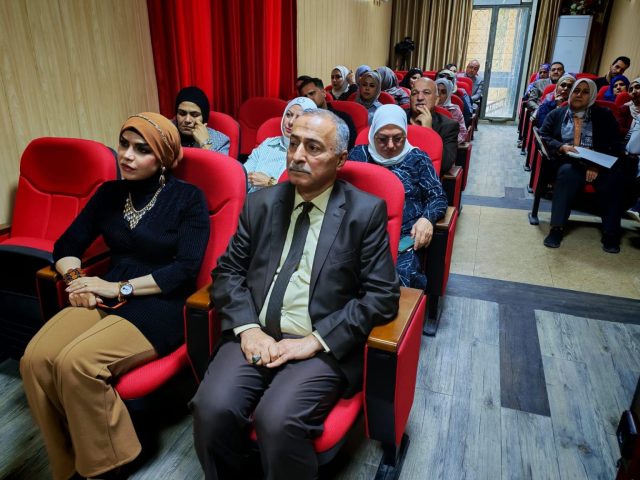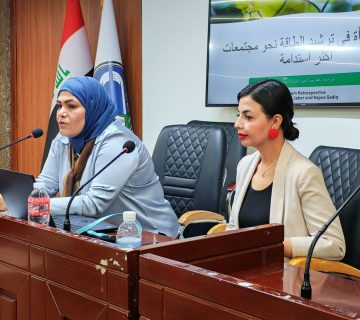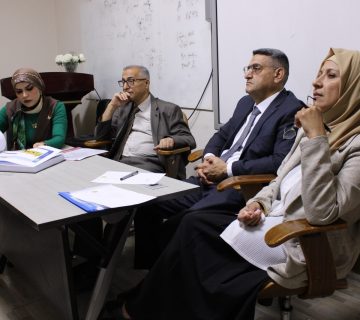

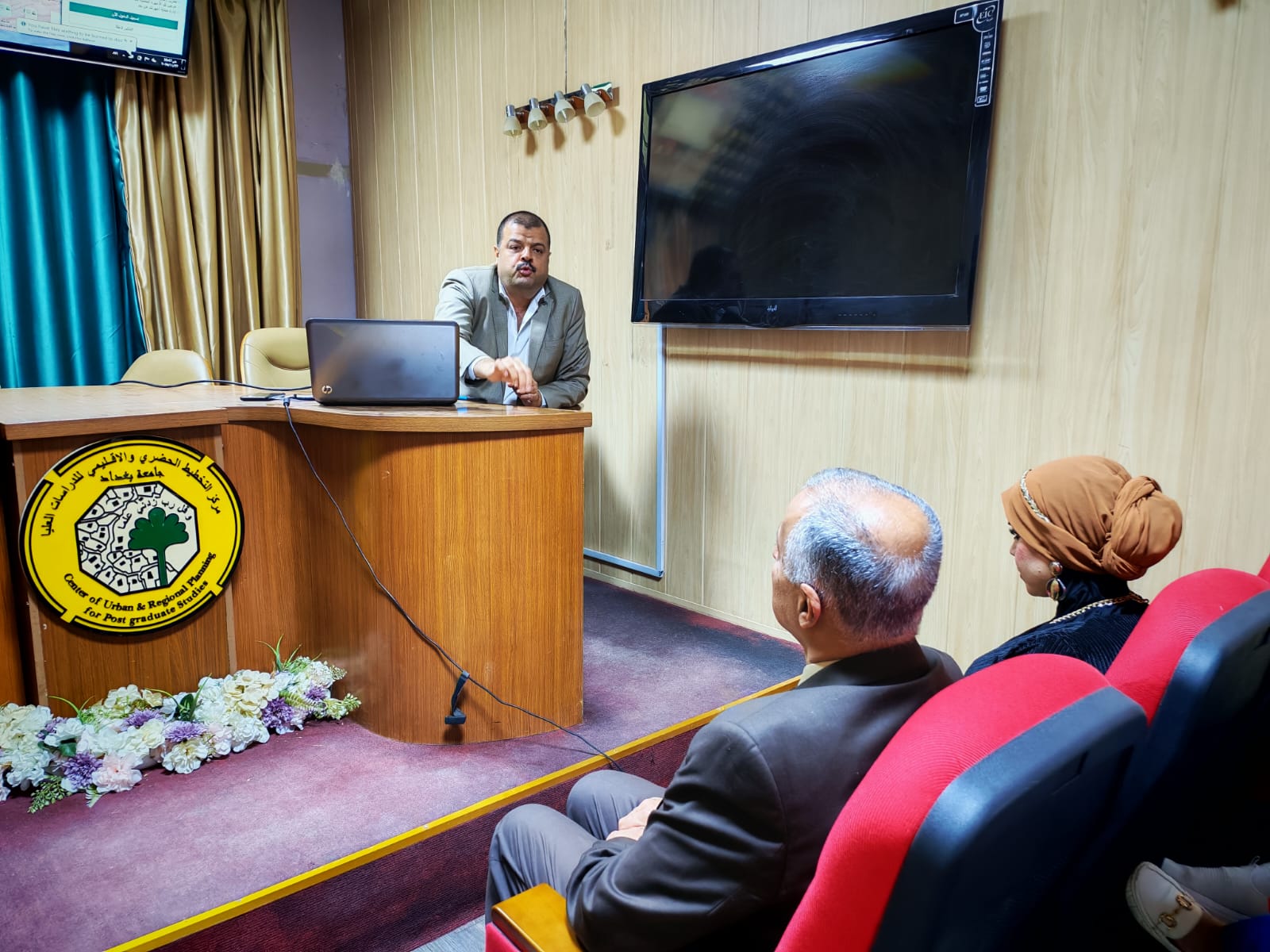
The Center of Urban and Regional Planning for Postgraduate Studies at the University of Baghdad organized a course entitled “Legal Procedures for Combating and Reducing Financial and Administrative Corruption in Iraqi Legislation.” The course was presented by Assistant Lecturer Haider Adnan, Head of the Legal Department at the Center, and attended by the Center’s faculty and staff. The course aimed to enhance legal and administrative awareness of the dangers of financial and administrative corruption in government departments, highlighting its negative impact on public funds and government institutions. It also aimed to identify the most prominent forms of financial and administrative corruption and review the preventive and oversight mechanisms used to detect and reduce it, while emphasizing the importance of strengthening cooperation with oversight bodies and institutions.
The course covered various topics, beginning with defining and explaining the nature of financial and administrative corruption. It then clarified the most prominent methods and techniques of administrative and financial corruption within government departments, presented the legislative stance on these illicit practices, and outlined the types of financial and administrative corruption that employees or clients may encounter in government departments.
The session concluded with a number of recommendations, most notably the need to make legislative amendments to close legal gaps in the fight against financial and administrative corruption, and to develop technical methods for early detection of financial corruption, as well as working to raise the efficiency of employees and workers in state departments while following up on the latest international developments in combating financial and administrative corruption in order to benefit from the experiences of developed countries.