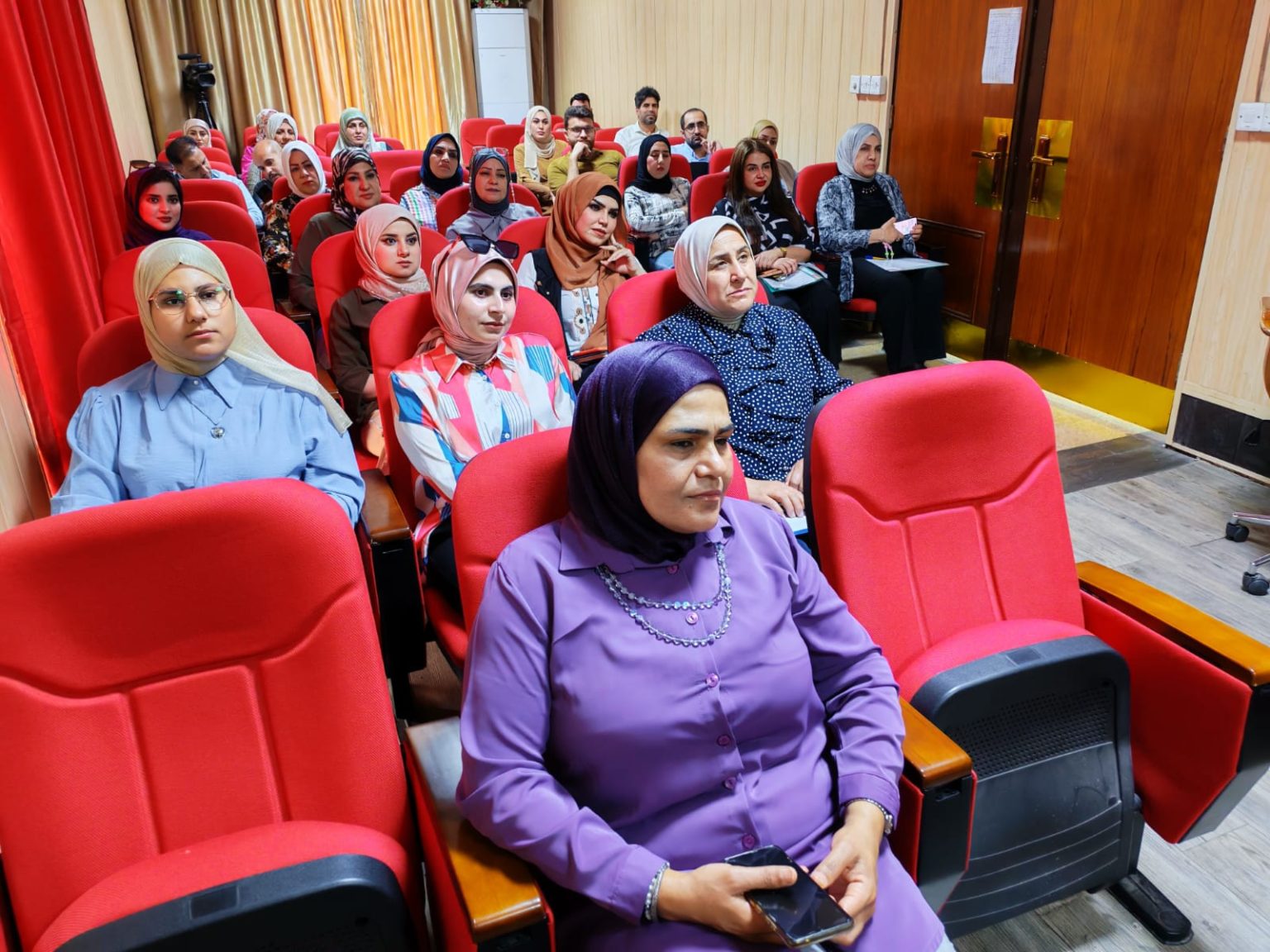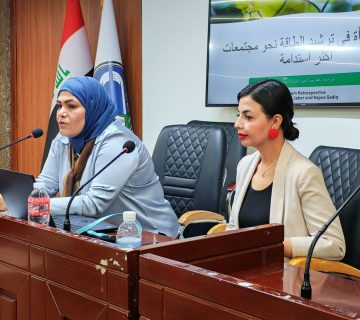

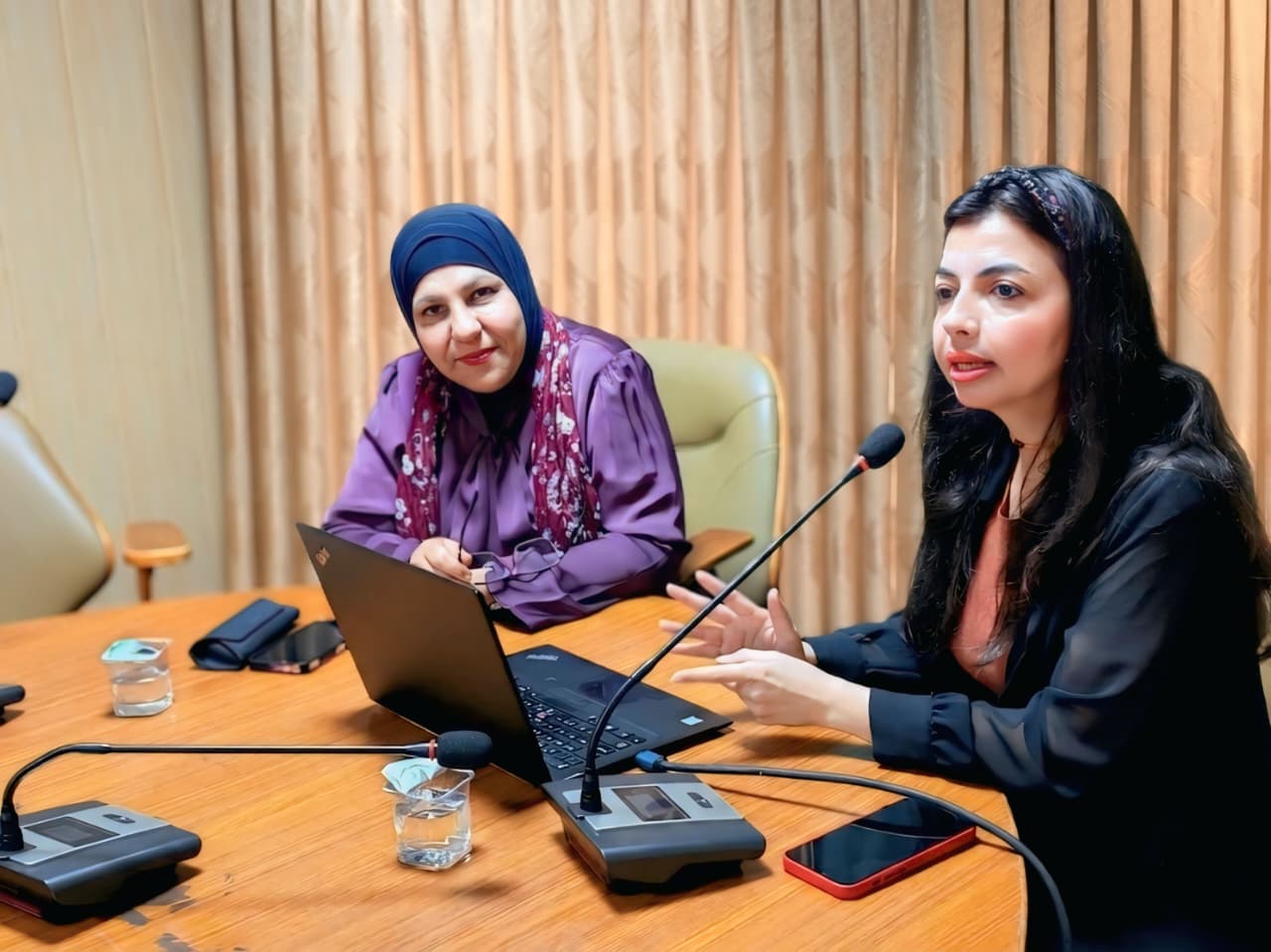
The Quality Assurance Unit at the Center of Urban and Regional Planning for Postgraduate Studies at the University of Baghdad held a workshop titled “Smart Environmental Management.” The workshop was presented by Professor Dr. Nada Khalifa and Assistant Lecturer Najwa Sadiq, and was attended by a number of faculty members and staff.
The workshop aimed to promote environmental sustainability through digital transformation by employing artificial intelligence, the Internet of Things (IoT), and big data technologies to monitor and protect natural resources automatically and continuously. This contributes to identifying environmental patterns and problems (such as pollution or drought) before they worsen, enabling informed decision-making based on accurate evidence.
The workshop addressed the modern concept of “smart environmental management,” which employs big data and artificial intelligence technologies to automatically and continuously monitor and protect natural resources. It focused on five strategic pillars aimed at enhancing sustainability: air quality through the use of precise sensors to monitor air pollutants (such as CO2 and NO2) in real time and issue immediate alerts when global limits are exceeded; water management through parallel layered systems to monitor sources, detect leaks in networks, and rationalize consumption, potentially saving up to 40% of water; waste management through the implementation of smart container systems and collection route optimization algorithms to save 30% of fuel, along with the adoption of automated sorting using robots to promote recycling; the adoption of renewable energy sources (solar, wind, and hydro) through AI predictions to avoid waste and ensure efficient distribution; and data integration to build a “backbone” linking sensor layers (satellites and IoT) with cloud processing layers to make informed and intelligent decisions.
The workshop concluded with a case study presentation on the city of Baghdad, highlighting the significant environmental challenges it faces and the current performance gaps in waste management and data. It was recommended that data integration and smart waste management projects be given the highest priority as a clear strategic opportunity to improve the quality of life and achieve a qualitative leap in the city’s environmental performance.