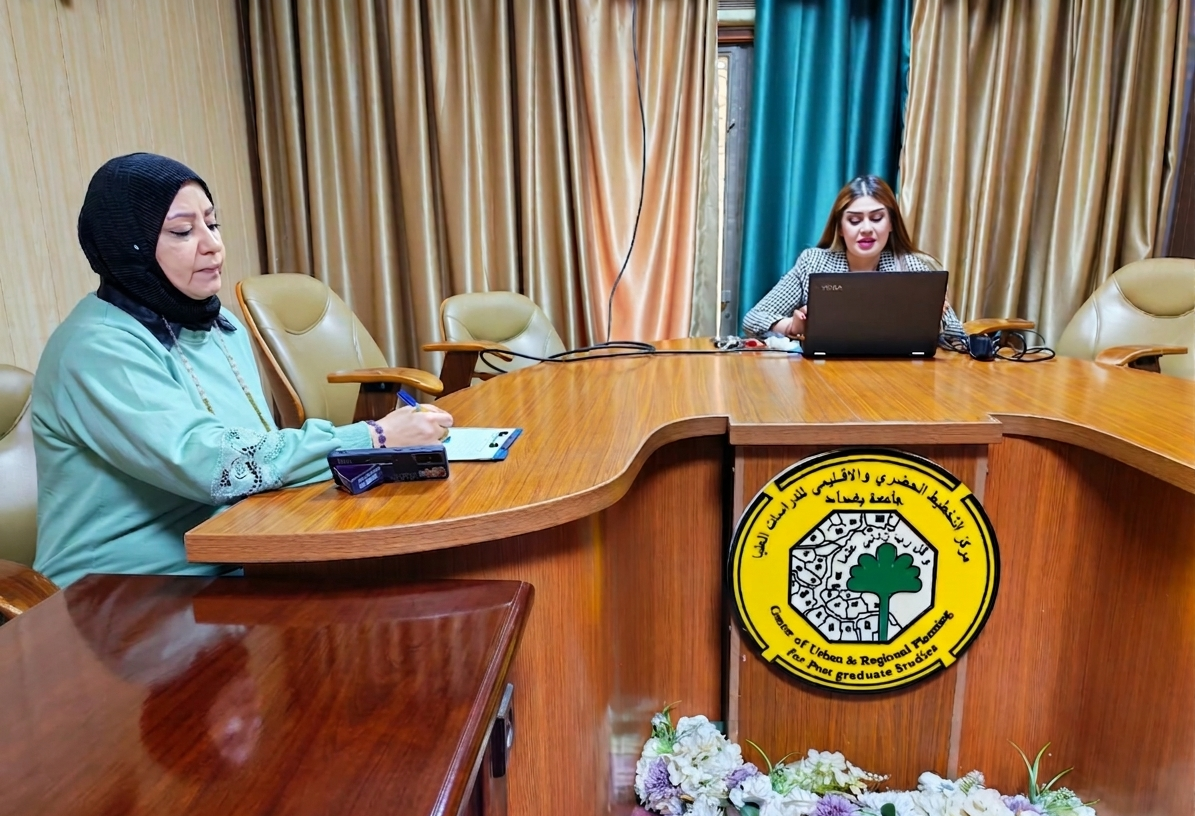
The Center of Urban and Regional Planning for Postgraduate Studies at the University of Baghdad held a scientific workshop entitled “Afforestation and the Economics of the City,” presented by Dr. Inas Dhia Hadi, a faculty member at the center, coinciding with National Afforestation Day. The workshop aimed to highlight the optimal utilization of open urban spaces and their afforestation, which contributes to the city’s economy by increasing urban appeal and activating spatial activities in the most beautiful way to serve people and utilize trees as an important economic resource.
The workshop included several topics, addressing the concept of afforestation and the concept of the city’s economics in terms of flower gardens, therapeutic gardens, and smart afforestation. Dr. Hadi concluded in her workshop that the benefits of afforestation include adding aesthetics to the area, as well as its role in purifying the air and surrounding environment, which in turn reduces dust, moderates the atmosphere, and increases oxygen levels. Afforestation also helps lower temperatures, which increases property values and enhances the city’s attractiveness to tourists. Furthermore, it plays a role in reducing noise and auditory and chemical pollutants, thus contributing to improved physical and mental health.